Mexico

Date: July 27-31, 2026
Location: Mexico City, Mexico
This program is developed by TOLI – The Olga Lengyel Institute for Holocaust Studies and Human Rights in partnership with Museo Memoria y Tolerancia. The seminar is co-funded by the Conference on Jewish Material Claims Against Germany, supported by the German Federal Ministry of Finance.
The aim of the seminar is to strengthen teachers’ capacity to provide responsible Holocaust education by equipping them to counter Holocaust distortion and antisemitism, engage critically with historical narratives, and design meaningful, student-centered learning experiences grounded in human rights and democratic values.
The objectives of the seminar are to:
- Strengthen teachers’ critical understanding of antisemitism, the Holocaust, and contemporary forms of Holocaust distortion, as well as their implications for democratic societies and human rights;
- Deepen teachers’ awareness of the impact of stereotypes, prejudice, discrimination, and exclusion at individual, group, and societal levels, with particular attention to antisemitism and other forms of racism and social injustice;
- Enhance teachers’ knowledge of Jewish life before, during, and after the Holocaust, emphasizing historical continuity, cultural diversity, and the consequences of rupture and loss;
- Develop teachers’ competences to critically assess historical narratives, educational materials, and public discourse, and to respond pedagogically to misinformation, contested memories, and antisemitic narratives in educational settings;
- Increase appreciation for and effective use of innovative, student-centered teaching methods, including interdisciplinary learning, extra-curricular activities, partnerships with cultural and memorial institutions, and the organization of educational visits to historical and memorial sites;
- Promote an interdisciplinary approach to Holocaust, human rights, and intercultural education that fosters critical thinking and respect for human dignity.
The seminar incorporates a methodology designed to ensure the basic principles of active participation and holistic learning throughout the program. The methodology is learner centered, based on the principles of experiential learning and a human rights-based approach in education. Special consideration is given to ensuring a balanced approach between cognitive and emotional elements and reflection time; balance between the information about the horrors of the Holocaust and information about the life of Jewish people before and after the Holocaust, for a more complex narrative; balance between reflection and action (learning is not enough, acting upon what was learned is the key to social change).
Seminar Overview
The “Learning from the Past – Acting for the Future: Teaching about the Holocaust and Human Rights” seminar, held in Mexico City, is an intensive professional development program designed to strengthen teachers’ knowledge of Holocaust education while connecting it to contemporary human rights, democratic values, and civic responsibility. Developed in partnership with Museo Memoria y Tolerancia, the seminar is co-funded by the Conference on Jewish Material Claims Against Germany with support from the German Federal Ministry of Finance. The program equips educators to counter Holocaust distortion and antisemitism, critically evaluate historical narratives, and create engaging, student-centered learning experiences.
Using an experiential, learner-centered approach, the seminar balances historical scholarship with personal reflection and practical classroom application.
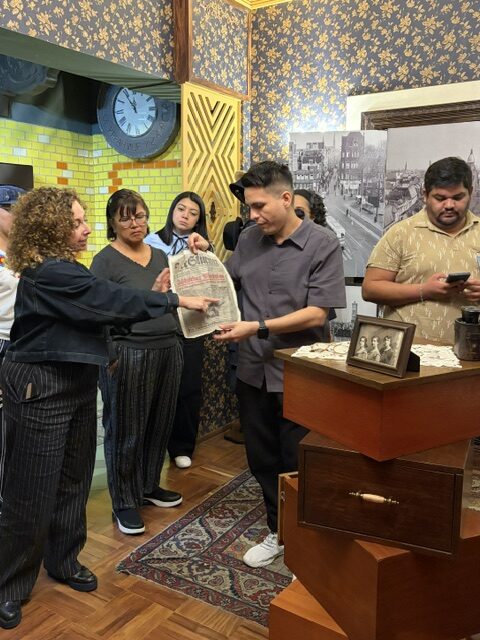
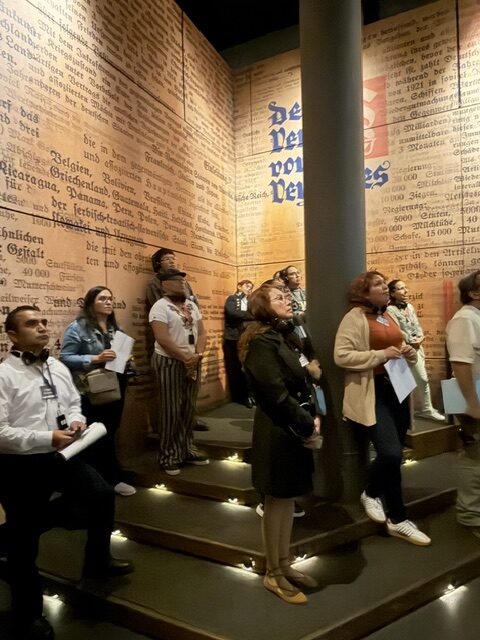
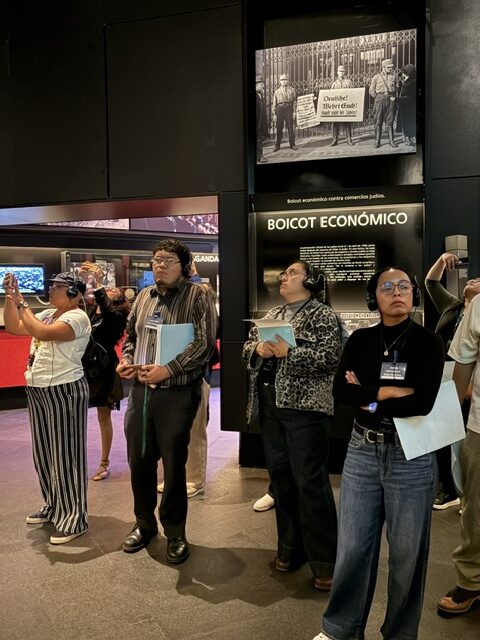
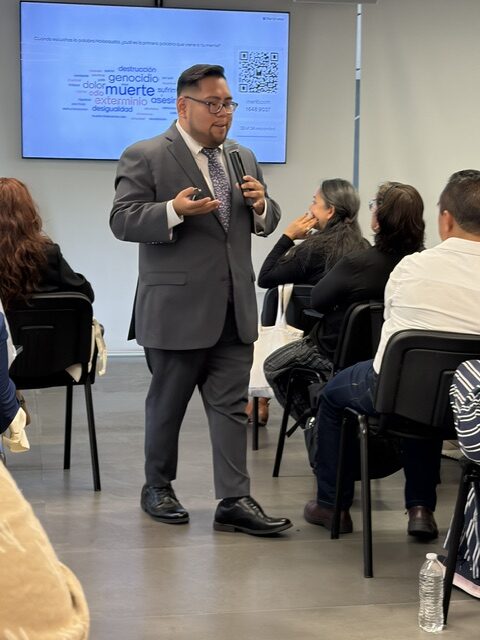
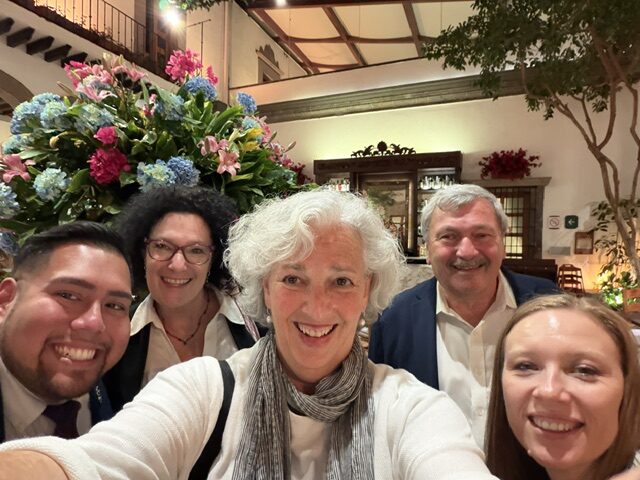
This year, thirty-three teachers from across Mexico participated in workshops, discussions, and collaborative activities before receiving ongoing support to implement local educational projects and joining TOLI’s international educator network.
The seminar featured an outstanding international faculty, including Oana Nestian-Sandu, TOLI’s Director of International Programs; Irvin Moreno-Rodriguez, Director of the Holocaust Resource Center at Stockton University; José Antonio Guevara Bermúdez, Academic Director of Museo Memoria y Tolerancia; Holocaust educator and second-generation speaker Sandra Rosenfeld Katz; and Jewish heritage expert Mónica Unikel-Fasja. Together, they provided historical expertise, personal perspectives, and practical teaching strategies that help educators foster critical thinking, empathy, and respect for human dignity in their classrooms.
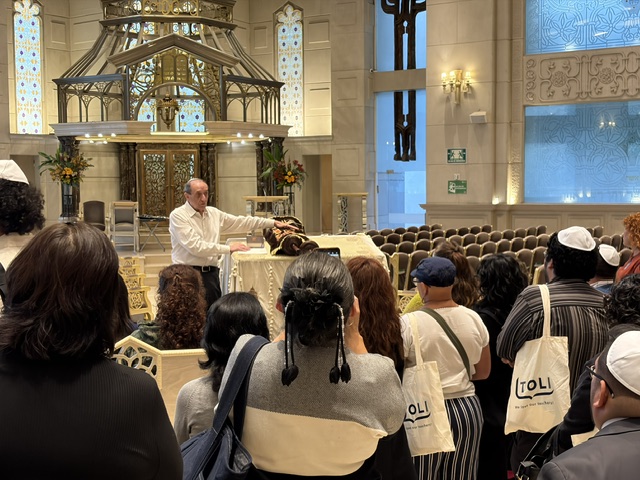
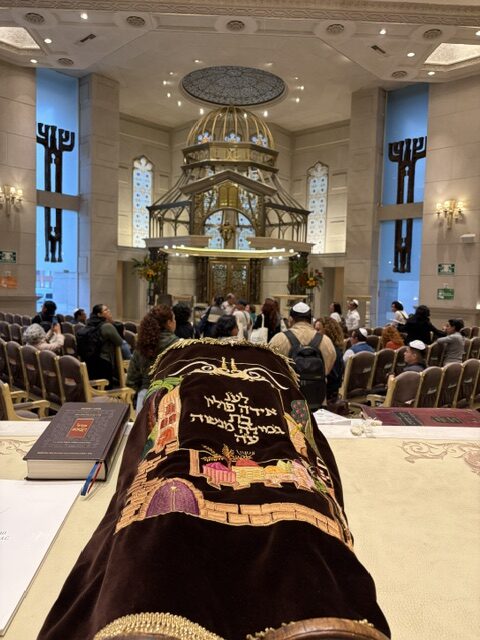
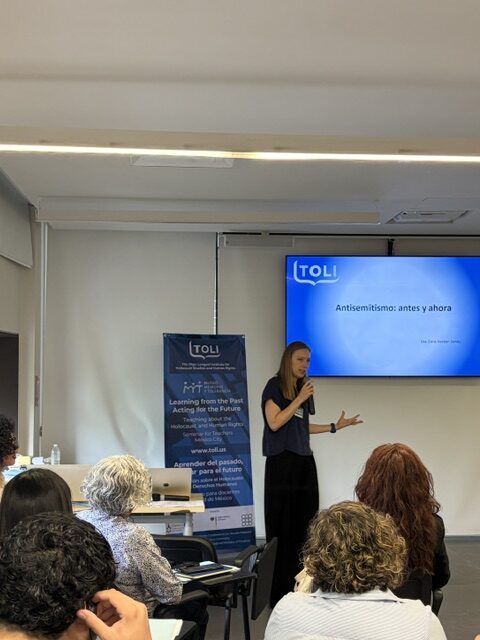
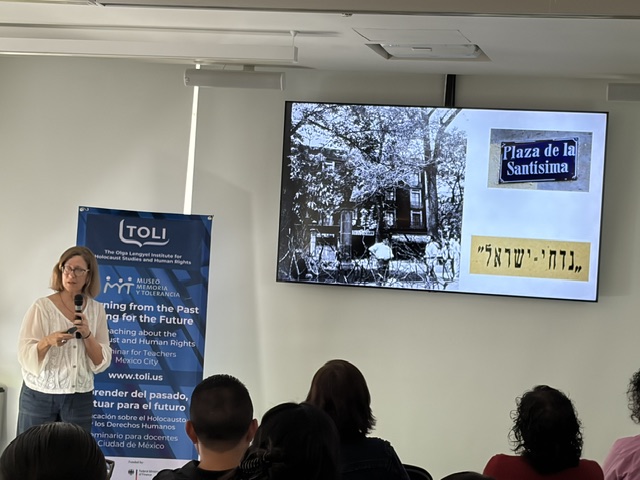
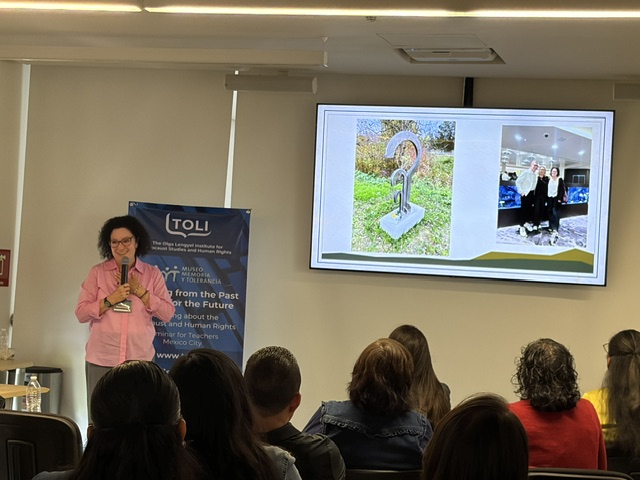
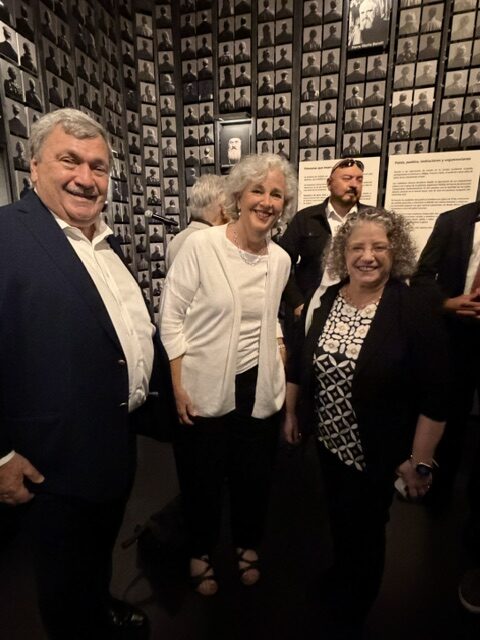
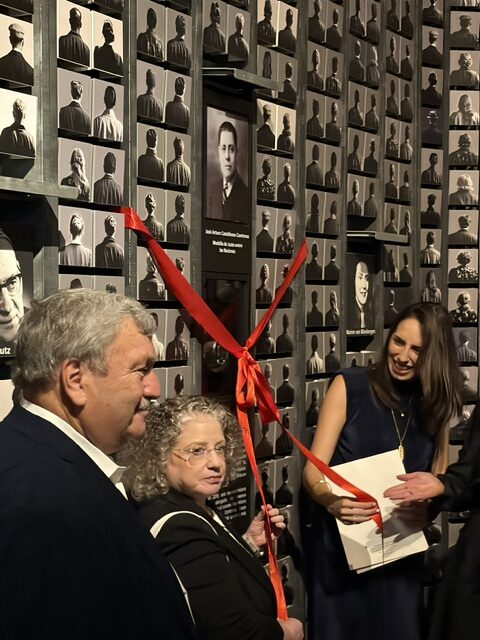
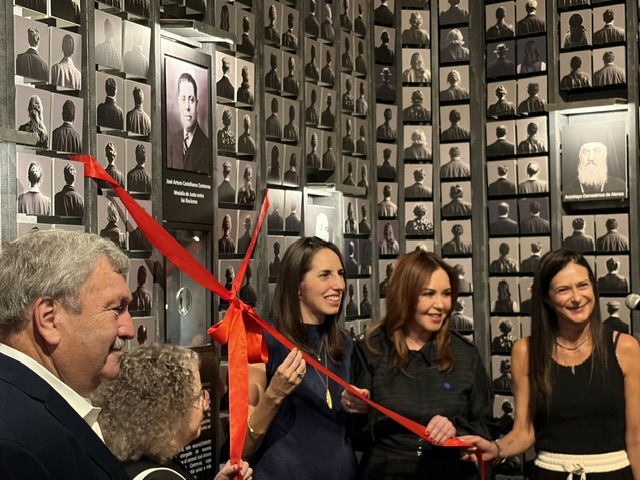
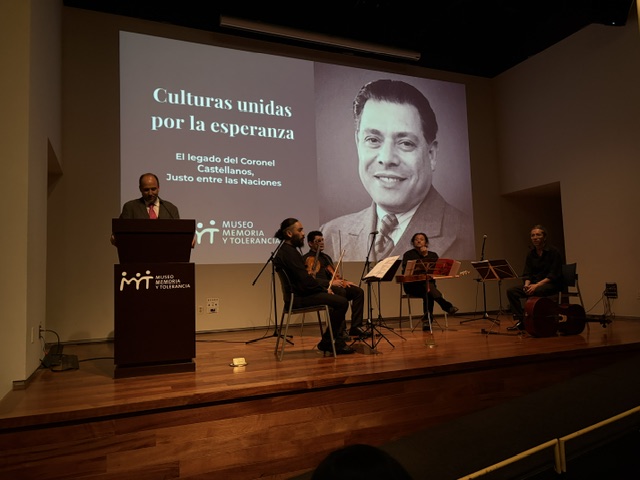
Program highlights included museum visits exploring the Holocaust, other genocides, and tolerance; a visit to the Museo Memoria y Tolerancia Museum and Shaar Hashamaim synagogue; and sessions examining antisemitism, Holocaust history, Jewish life in Mexico, Holocaust distortion, genocide, human rights, resistance through art, and the role of educators in combating hate. Specific topics included “The Role of Educators in Countering Antisemitism” (Deborah Lauter, TOLI Executive Director), “History, Arrival, and Daily Life of Jews in Mexico: A Visual Journey” (Monica Unikel-Fasja), and “Resistance Though Art during the Holocaust” (Sandra Rosenfeld Katz). Participants also developed action plans for classroom and community projects and learned about TOLI’s Impact Grant Program.
As new members of TOLI’s global educator network, participants continue their learning beyond the seminar, helping to strengthen Holocaust education and promote democratic values and human rights in schools and communities across Mexico.
With Assistance from the Conference on Jewish Material Claims Against Germany
Supported by the German Federal Ministry of Finance
Speakers
José Antonio Guevara Bermúdez is the Academic Director of the Museum of Memory and Tolerance in Mexico City and an Associate Professor at the Autonomous University of Tlaxcala. He is a Mexican lawyer, human rights advocate, and academic with more than 25 years of experience in international human rights law, international criminal law, and international humanitarian law. He has held senior positions in civil society, government, and human rights mechanisms, including the United Nations Working Group on Arbitrary Detention. He currently serves on international expert groups and governing boards focused on human rights, atrocity crimes, and minority rights.
Deborah Lauter is the Executive Director of TOLI – The Olga Lengyel Institute for Holocaust Studies and Human Rights. Deborah served in senior management at the Anti-Defamation League (ADL) for 18 years, including as Senior Vice President, where she oversaw ADL’s domestic programs on anti-bias and Holocaust education, civil rights, extremism, and hate on the internet. In 2019, the Mayor of New York City appointed her to create and lead the NYC Office for the Prevention of Hate Crimes, the first of its kind in the country. She has three decades of nonprofit and government leadership in civil and human rights, inter-group relations, and anti-bias education.
Irvin Moreno-Rodriguez is a distinguished bilingual Holocaust educator whose research focuses on the role of Latin America during the Holocaust and the histories of Holocaust survivors in southern New Jersey. By focusing on Latin America’s role during the Holocaust and by leading tours and programs of the Sara and Sam Schoffer Holocaust Resource Center in Spanish, Irvin has made Holocaust education accessible to new audiences across the United States. Since 2018, Irvin has been a vital member of the Sara and Sam Schoffer Holocaust Resource Center at Stockton University. In 2022, he became the assistant director. Today, he serves as the director of Stockton’s Holocaust Resource Center. Irvin holds a Bachelor of Arts in Criminal Justice with a Minor in Holocaust and Genocide Studies and a Master of Arts in Holocaust and Genocide Studies, both from Stockton University. In 2021, Governor Phil Murphy appointed Irvin as a member of the New Jersey Commission on Holocaust Education.
Oana Nestian-Sandu is the Director of International Programs at TOLI – The Olga Lengyel Institute for Holocaust Studies and Human Rights. With a Ph.D. in Social Psychology and two decades of experience, she has worked with thousands of teachers in over 15 countries to develop transformative educational programs on the Holocaust, human rights, and intercultural education. She is the author of Learning from the Past, Acting for the Future – An Interdisciplinary Approach to Holocaust, Human Rights and Intercultural Education (www.toli.us/european-seminar-handbooks/) a widely used interdisciplinary handbook for teachers. Oana brings her expertise to international organizations such as the Council of Europe, the United Nations, and IHRA, where she contributes to advancing education that addresses Holocaust distortion and strengthens remembrance practices. At the heart of her work is a deep commitment to promoting respect for human dignity. She supports educators in confronting antisemitism, anti-Roma racism, and other forms of hate by fostering empathy, historical understanding, and a sense of civic responsibility in the classroom.
Sandra Rosenfeld Katz was born in Mexico City and has dedicated most of her professional life to education, Holocaust remembrance, and the arts. She has worked in museums in both Mexico and Israel, creating exhibition catalogues, art magazines, and serving as a guide and instructor. For more than 12 years, she developed hybrid, interdisciplinary educational projects through and about art. Sandra joined Yad Vashem, the World Holocaust Remembrance Center in Jerusalem, in 2010 as an instructor and guide, later serving briefly as Coordinator of International Educators’ Seminars. From 2015 to 2023, she worked in the E-Learning Department of Yad Vashem’s International School for Holocaust Studies, where she developed and produced online educational resources, including MOOCs, testimony films, lesson plans, webinars, and videos – some of them focused on Holocaust art. Since mid-2023, she has worked independently as a researcher, Second Generation speaker, and producer of e-learning projects and films.
Mónica Unikel-Fasja. Born in Mexico in 1963, she has been conducting guided tours focused on the Jewish presence in Mexico City for over thirty years. Mónica was part of the team that restored the Nidje Israel Synagogue and spearheaded its revitalization as a Jewish cultural center open to the general public; the venue opened its doors in 2010, and Mónica has managed it ever since. During the pandemic, she created a Zoom interview series featuring individuals over the age of 80, titled De Inmigrantes y sus Historias (Of Immigrants and Their Stories), with the aim of preserving testimonies and photographs of immense value to the community’s collective memory.