Moldova
Date: November 2-6, 2026
Location: Chișinău, Moldova
About the 2026 Seminar
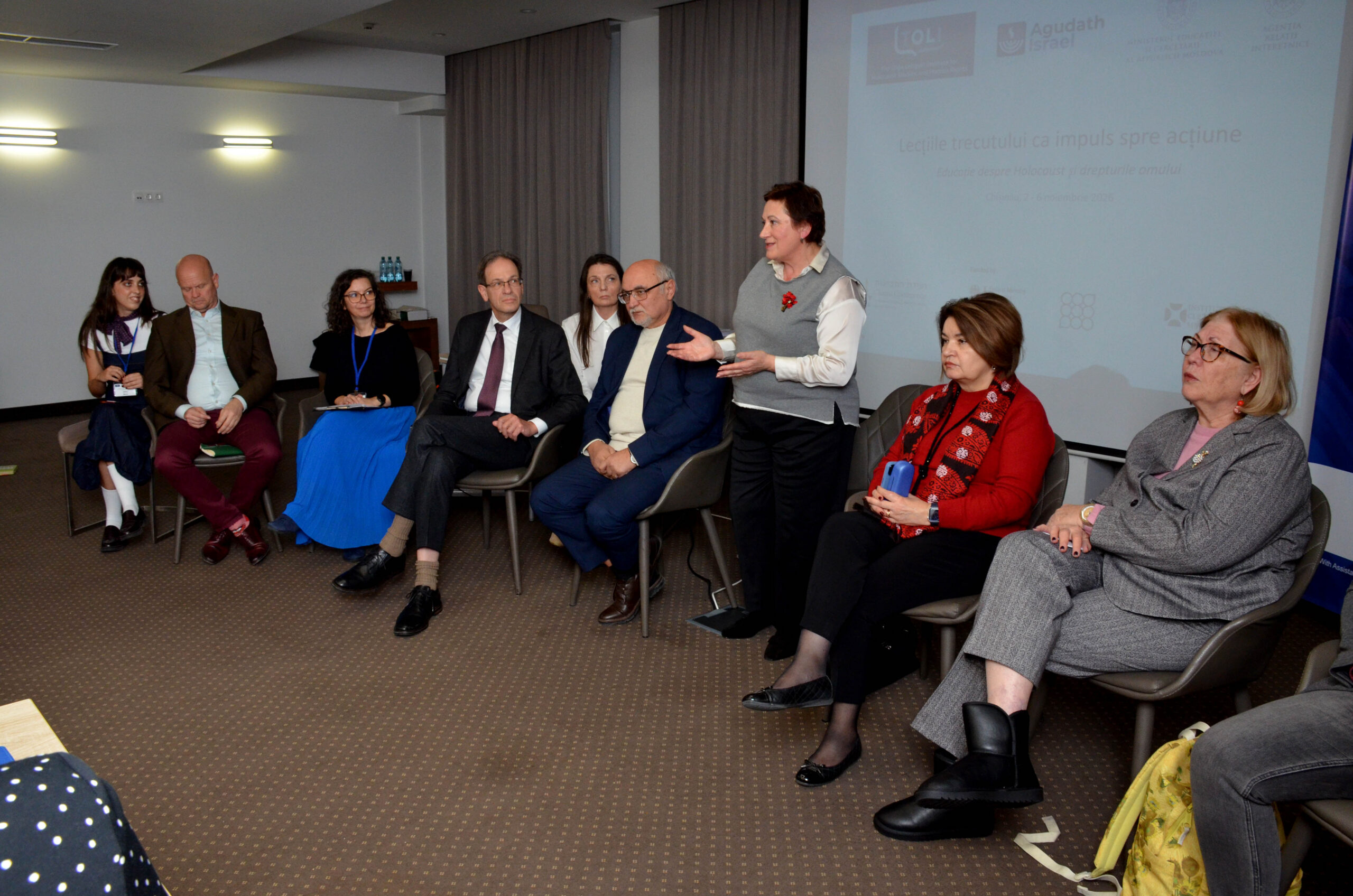
In November, educators from across the Republic of Moldova came together for our second seminar in Chisinau to explore the history of the Holocaust, the roots and consequences of antisemitism, and the importance of teaching the Holocaust through the lens of human rights.
The seminar opened with welcoming remarks from representatives of the German Embassy, Moldova’s Ministry of Education and Research, the Agency for Interethnic Relations, the Romanian Cultural Institute, Tarbut Sighet Foundation, and Agudath Israel in Moldova. We were also pleased to welcome a representative of the U.S. Embassy.
Throughout the seminar, a highly motivated group of history and social science teachers examined antisemitism both past and present, at the local and global levels, while reflecting on the layers of individual and collective responsibility during the Holocaust.
Learning extended beyond the classroom. Participants took a guided tour of Jewish Chisinau, visiting the former Ghetto area, memorials commemorating its victims and those murdered in the 1903 pogrom, and the Jewish Cemetery. A visit to the Agudath Synagogue and a kosher dinner offered a meaningful opportunity to learn about Jewish life, culture, and traditions.
The seminar also came at an important time for education in the Republic of Moldova, as the Ministry of Education and Research updates curricula in History and Social Sciences. Teachers involved in this process enthusiastically embraced TOLI’s interdisciplinary methodology as a valuable resource for their work. Participants shared that the experience had broadened their perspectives on teaching and opened new possibilities for bringing Holocaust and human rights education into their classrooms.
Organized in partnership with Agudath Israel in Moldova, the Ministry of Education and Research, and the Agency of Interethnic Relations, with assistance from the Romanian Cultural Institute in Chisinau and Claims Conference (Conference on Jewish Material Claims Against Germany) with support by the German Federal Ministry of Finance, this seminar demonstrated the importance of connecting historical understanding with the challenges facing educators and societies today. By equipping teachers with new knowledge, perspectives, and interdisciplinary approaches, TOLI continues to strengthen Holocaust and human rights education across borders.
With Assistance from the Conference on Jewish Material Claims Against Germany
Supported by the German Federal Ministry of Finance
This seminar is organized by TOLI – The Olga Lengyel Institute for Holocaust Studies and Human Rights, in partnership with Agudath Israel in Moldova, the Ministry of Education and Research of the Republic of Moldova and the Agency for Interethnic Relations. The program takes place in Chișinău and brings together a group of 30 teachers from across the country.
The purpose of the seminar is to contribute to enhancing the quality of Holocaust and human rights education in the Republic of Moldova. The seminar underscores the contemporary relevance of this vital part of modern history and offers educators a valuable opportunity to integrate both national and international approaches in teaching these subjects.
The objectives of the seminar are:
- To develop teachers’ critical understanding of antisemitism, the Holocaust, and other forms of social injustice;
- To deepen educators’ awareness of how stereotypes, prejudices, and discrimination impact individuals, groups, and broader society;
- To enhance teachers’ knowledge of Jewish life before and after the Holocaust;
- To promote awareness among educators of the Roma genocide;
- To foster appreciation for innovative, student-centered teaching methods, including extracurricular activities and partnerships between schools and other institutions and organizations;
- To support an interdisciplinary approach to the Holocaust, human rights, and intercultural education;
- To develop teachers’ competencies for democratic culture and promote positive values for living in a diverse world, such as respect, interculturalism, dialogue, and appreciation of others.
The seminar employs a methodology based on the principles of active participation and holistic learning throughout the program. This learner-centered methodology is rooted in experiential learning principles and a human-rights based approach to education. Special emphasis is placed on maintaining a balanced approach between cognitive and emotional elements; between information about the horrors of the Holocaust and insights into Jewish life before and after the Holocaust; and between learning and action—because learning alone is not enough; taking action based on what has been learned is the key to social change.
The pedagogical approach promoted in the seminar is based on the interdisciplinary methodology described in the TOLI Handbook for Teachers Learning from the Past Acting for the Future: https://www.toli.us/european-seminar-handbooks/