
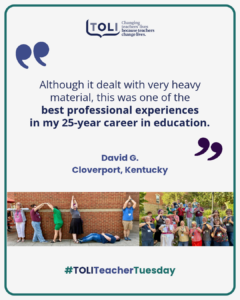
What does it mean to teach about human rights, social justice, and the lessons of the Holocaust in a way that reaches students beyond a single lesson or unit? For David G., a high school science teacher with 25 years of classroom experience, the answer begins with a commitment to learning, reflection, and finding meaningful connections across the curriculum.
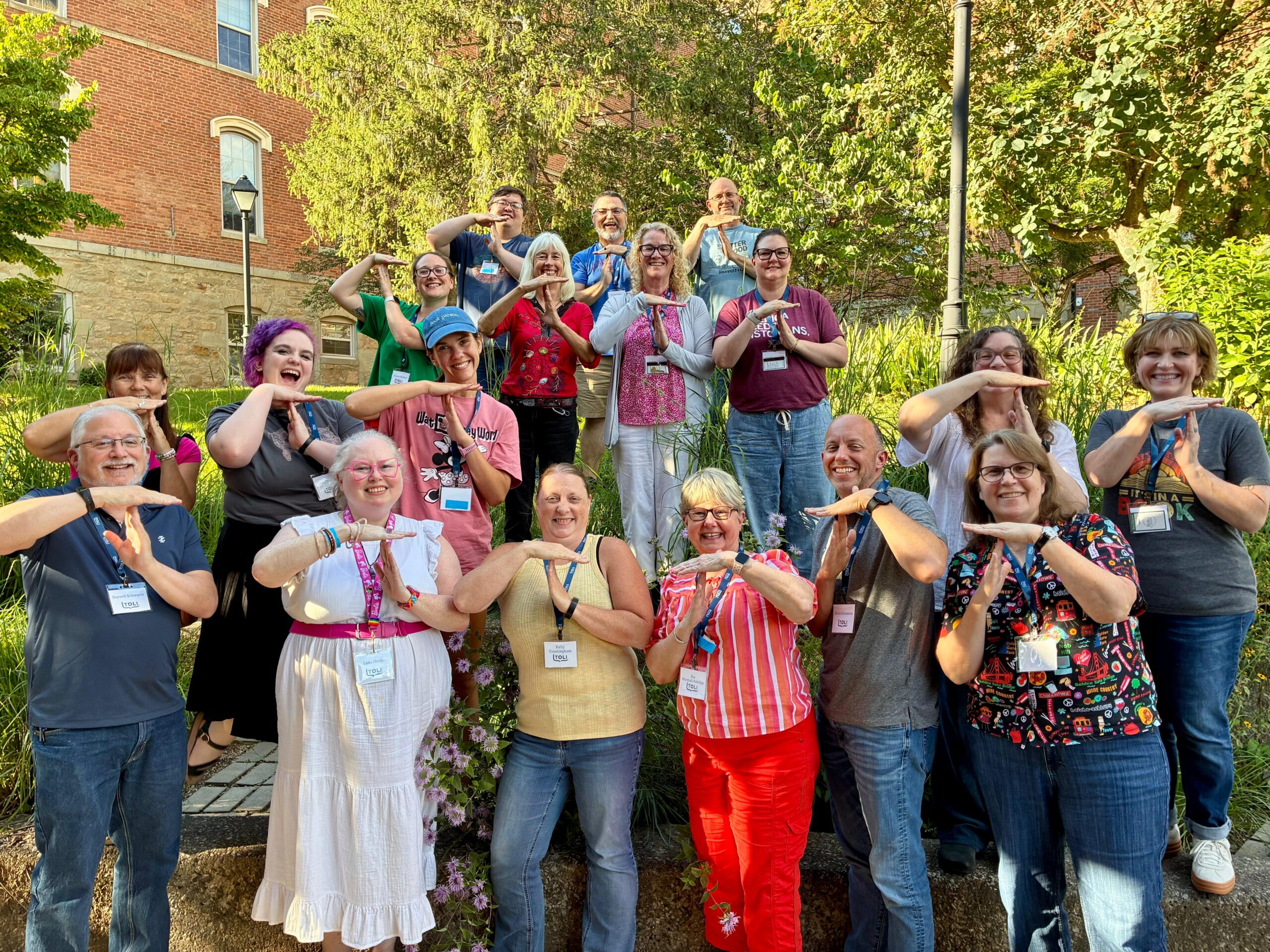
We were honored to welcome David to our 2026 Kentucky Seminar, where he explored how educators can bring the lessons of the Holocaust, civil rights, and human rights into their classrooms in thoughtful, impactful ways.
As a science teacher who teaches biology, chemistry, agricultural biology, and introductory physical science, David brings a unique perspective to this work. Although his courses do not traditionally focus on the Holocaust or human rights, he recognizes that science education offers important opportunities to broaden students’ understanding of the world and the people who have shaped it. He already makes an effort to highlight scientific contributions from a wide range of individuals, moving beyond the familiar names that have traditionally dominated the narrative of scientific discovery.
For David, attending the seminar was about building on that foundation.
David teaches in a small, close-knit school district where students often grow up together and where exposure to different cultures and perspectives can be limited. As the school’s sole high school science teacher, he has a distinctive opportunity to reach the entire high school population throughout their academic careers.
He recognizes that students may understand the historical horrors of the Holocaust but still need opportunities to connect those lessons to broader questions of human rights and injustice in the world today. He sees education as an essential way to encourage students to look beyond familiar perspectives, challenge stereotypes, and consider experiences different from their own.
His goal isn’t simply to introduce students to new information. It’s to help them develop the knowledge and critical thinking skills necessary to engage thoughtfully with complex issues.
One of David’s most powerful insights is that meaningful human rights education doesn’t always require a separate unit or an entirely new course. Instead, these conversations can become recurring touchpoints woven throughout the curriculum.
Through the knowledge and resources gained at our Kentucky seminar, David made connections between science, history, human rights, and social justice throughout his courses. By incorporating these perspectives into students’ learning over time, he hopes to create opportunities for reflection and growth that extend beyond a single classroom discussion.
This approach highlights the important role educators across all subject areas can play in helping students understand the world around them. Whether teaching science, literature, history, or mathematics, teachers can create opportunities for students to examine assumptions, consider diverse perspectives, and recognize the human stories behind what they learn.
The impact of a TOLI seminar extends far beyond the days educators spend together. Professional learning creates space for teachers to ask difficult questions, reconsider familiar narratives, deepen their own understanding, and explore new ways to approach challenging topics with their students.
For David, the seminar offered an opportunity not only to strengthen his knowledge of the Holocaust, civil rights, and human rights, but also to continue his own personal journey of learning and reflection. He expressed a desire to examine dominant narratives more critically, better understand contemporary human rights issues, and develop the confidence to address these subjects thoughtfully in his classroom.
He also recognized the value of gaining practical resources and building a network of fellow educators who can support one another as they navigate this work.
This kind of professional growth matters. Educators who are willing to question, reflect, and continue learning can open new possibilities for their students. When teachers gain the knowledge, tools, and support to approach complex subjects with care, they are better equipped to create learning experiences that encourage curiosity, empathy, and critical thought.
David’s experience reflects an important purpose of our seminars: empowering educators to carry their learning forward and translate it into meaningful classroom practice.
The work of Holocaust and human rights education does not end when a seminar concludes. It continues when a teacher returns to the classroom with new questions to explore, new resources to share, and a renewed commitment to helping students see the world from multiple perspectives.
For David, that work will take place in science classrooms, where students can encounter these ideas throughout their high school years – not as isolated topics, but as part of an ongoing conversation about humanity, responsibility, and the world we share.
We are grateful to David for joining us this summer, and for his thoughtful commitment to helping students become more informed, reflective, and engaged members of their communities.
His experience reminds us that when we invest in educators, we invest in the students they teach and the communities those students will shape for years to come.
Thank you, David, for being part of this important work!
David G: From Seminar to Classroom, Turning Learning Into Lasting Impact